Erased at the Ballot: Millions Lose Voting Rights Ahead of West Bengal Elections in India
4-22-2026
 Email
to a friend Email
to a friend
 Post
a comment Post
a comment
 Print Print
West Bengal, India – For more than half a century, 73-year-old Nabijan Mondal never missed an election. Whether it was a national, state, or local vote, she showed up, cast her ballot, and took part in India’s democratic process. This year, for the first time in decades, she will not.
As West Bengal heads into a crucial two-phase assembly election, Nabijan’s name is missing from the voter rolls.
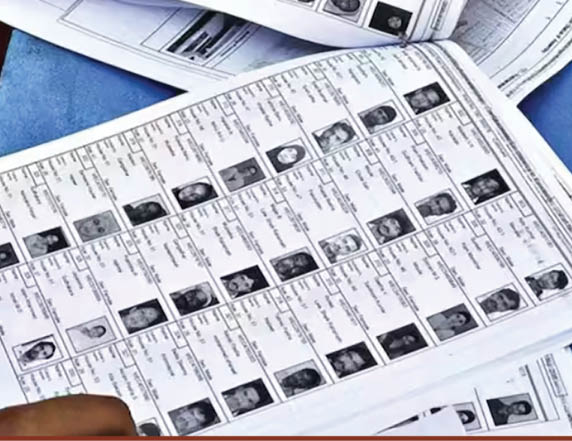
Her exclusion follows a sweeping and controversial electoral revision conducted by India’s Election Commission through a process known as Special Intensive Revision (SIR). The exercise, carried out in multiple states, was intended to clean up voter lists by removing duplicate, deceased, or ineligible voters. In West Bengal alone, however, it has resulted in the deletion of more than nine million names—nearly 12% of the state’s electorate.
For Nabijan, the reason was something she never imagined would matter: a discrepancy in her name. While she has long been known as “Nabijan” on her voter ID, her official documents—including her Aadhaar biometric ID and ration cards—list her as “Nabirul.” That mismatch proved enough to exclude her from the final list.
Her entire family—her husband, children, and their spouses—remains eligible to vote. She alone has been left out.
“I don’t understand these things,” she said quietly. “All my life I voted. Now my whole family will go, but I won’t be able to.”
Millions Disenfranchised
Nabijan is far from alone. Of the more than nine million voters removed, around six million have been classified as “absent, shifted, or deceased,” while roughly three million others have been left in limbo, their eligibility subject to review by special tribunals.
In theory, those affected can appeal. In practice, the scale of the issue makes timely resolution nearly impossible. With elections imminent, tribunals are overwhelmed, and many cases will not be heard before polling concludes. India’s Supreme Court has already ruled that those with pending cases cannot vote, though it has allowed for the possibility of supplementary voter lists.
For many, the process of appeal itself is daunting—requiring extensive documentation, time, and money.
“I am in deep pain,” said Sohidul Islam, a 49-year-old from Murshidabad district who had voted in previous elections but now finds himself excluded. “I never thought this would happen. But now I have no choice but to fight to get my name back.”
Disproportionate Impact
West Bengal is home to about 25 million Muslims, roughly 27% of its population. Data and field reports suggest that this community has been disproportionately affected by the voter deletions.
In districts with large Muslim populations—such as Murshidabad, North 24 Parganas, and Malda—hundreds of thousands of names have been struck off. Researchers and local organizations report widespread issues: missing documentation, spelling inconsistencies, name changes after marriage, and difficulties proving residence or lineage.
In some cases, even individuals with seemingly complete documentation have been removed.
Jesmina Khatun, 31, had voted in three previous elections. All her documents are in order—except for a minor discrepancy in her father’s name, spelled slightly differently across records. While her father remains on the list, she does not.
“I don’t know what to do now,” she said. “Everything is correct, but still my name is gone. I feel anxious all the time.”
Experts say such inconsistencies are common in India, especially in rural areas and among women. Variations in spelling, translation between languages, and the use of nicknames frequently lead to mismatches across documents.
Allegations and Political Tensions
The Election Commission maintains that the SIR exercise is necessary to ensure the integrity of voter rolls. Officials argue that removing duplicates and ineligible names strengthens democracy.
But critics see it differently.
Opposition leaders, civil society groups, and independent researchers have accused authorities of conducting the revision in a rushed and opaque manner, potentially skewing the electorate ahead of a high-stakes election.
West Bengal has long been governed by the Trinamool Congress (TMC), led by Chief Minister Mamata Banerjee. The Bharatiya Janata Party (BJP), which governs nationally, has made significant efforts to gain ground in the state but has struggled, in part due to limited support among Muslim voters.
Banerjee has alleged that the voter roll revision was selectively implemented to benefit the BJP, calling it an attempt to manipulate the democratic process.
Researchers have also pointed to troubling patterns. In some constituencies, Muslims make up a minority of the population but account for a disproportionately large share of deleted voters. Analysts suggest that data-driven tools used during the revision may have flagged “discrepancies” that disproportionately affect Muslim names due to linguistic variations.
“There seems to be some motive behind the hurried nature of this exercise,” said one researcher, noting that electoral roll revisions typically take years, not months.
Technology and Human Consequences
Part of the controversy surrounds the reported use of AI-assisted tools to identify inconsistencies in voter data. While intended to improve accuracy, critics argue that such systems fail to account for cultural and linguistic complexities.
India has no standardized method for transliterating names across languages like Bengali, Urdu, and English. Small differences—such as “Gaffar” versus “Goffer”—can trigger red flags in automated systems.
For many, these technical issues have had deeply personal consequences.
In Murshidabad, one man who spent months helping verify voter data found his own name missing from the final list. Others, including retired public servants and teachers, have also been excluded despite decades of service and participation in elections.
A Burden on the Vulnerable
Experts warn that the burden of proof falls disproportionately on the most vulnerable—especially women and the poor.
Women, in particular, face unique challenges. In many cases, they move to a new household after marriage, requiring documentation from both their parental and marital homes. Name changes after marriage further complicate matters.
“This creates an excessive burden,” said one political analyst. “Men typically have documents tied to one location. Women often need to prove identity across multiple places, sometimes with inconsistent records.”
For those with limited education or access to paperwork, meeting these requirements can be nearly impossible.
Fear and Uncertainty
Beyond the immediate impact on voting rights, the deletions have sparked widespread anxiety.
In border regions, some fear being labeled as “illegal immigrants,” a politically charged term often used in debates about migration from neighboring Bangladesh. The rhetoric has heightened concerns among communities already feeling marginalized.
“There is panic,” said one local resident. “People are afraid—not just of losing their vote, but of what it means for their identity and place in this country.”
The Stakes
With millions unable to vote, the implications extend beyond a single election. Analysts warn that such large-scale disenfranchisement could reshape political outcomes and raise fundamental questions about democratic fairness.
“This is not just about administrative errors,” said one commentator. “It’s about who gets to participate in democracy—and who is left out.”
For Nabijan Mondal, the issue is simpler, yet no less profound.
After a lifetime of participation, she now finds herself excluded from the very system she trusted.
“I voted every time,” she said. “Now, I just sit at home.”
|