The Assault on Imam Ebrahim Ali Is a Warning Canada’s Muslim Communities Cannot Afford to Ignore
Jafar Bhamji
6-23-2026
 Email
to a friend Email
to a friend
 Post
a comment Post
a comment
 Print Print
Condemnation Is Not Enough. Preparedness Must Follow.
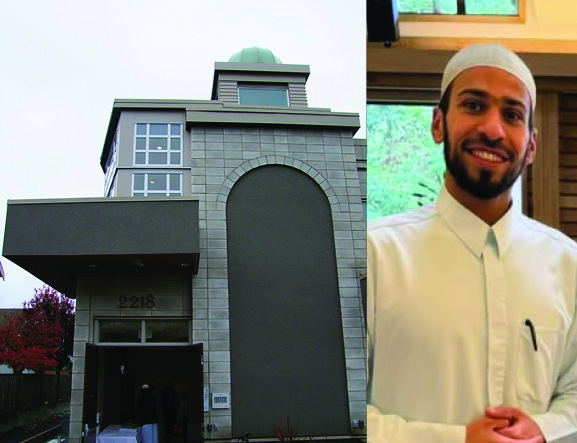
The alleged hate-motivated assault on Imam Ebrahim Ali outside Masjid Al Iman in Victoria has shaken Muslim communities across British Columbia and Canada. For many worshippers, the attack was not merely an assault on a respected religious leader; it was a reminder that acts of anti-Muslim hostility can emerge in the very spaces where communities gather for prayer, reflection, and belonging.
The immediate reaction was both appropriate and necessary. Muslim organizations, community leaders, elected officials, and civil society groups condemned the violence. Expressions of solidarity poured in from across the country. The BC Muslim Association (BCMA), the National Council of Canadian Muslims (NCCM), and other organizations rightly emphasized accountability, safety, and resilience.
Yet once the statements are issued and the headlines fade, a more difficult question remains: Are Canadian Muslim institutions adequately prepared for the reality that such attacks can happen again?
The answer is increasingly difficult to ignore.
A Disturbing Incident Close to Home
According to reports, Imam Ebrahim Ali was attacked near Masjid Al Iman after prayers while seated in his vehicle near his home in Victoria. The circumstances remain under investigation, but authorities have indicated they are examining the incident as a potentially hate-motivated attack.
The chronology matters.
This was not an attack occurring during a major political demonstration. It was not connected to a highly secured public event. It allegedly took place during the ordinary rhythm of community life—after prayers, near a mosque, in a residential setting.
That fact alone should concern Canadians.
For Muslim communities, mosques are not merely places of worship. They serve as community centres, classrooms, counselling spaces, food distribution hubs, youth centres, and gathering places for families. When an imam is allegedly targeted in proximity to such a space, the psychological impact extends far beyond the individual victim.
The message received by many congregants is simple: if an imam is vulnerable, who is not?
The Pattern Cannot Be Ignored
The assault did not occur in isolation.
Over the past decade, Canada has witnessed numerous incidents targeting Muslims and Islamic institutions. The 2017 Quebec City mosque attack remains one of the darkest moments in modern Canadian history. In 2021, the murder of the Afzaal family in London, Ontario, demonstrated how anti-Muslim hatred can turn deadly. Across the country, mosques have reported vandalism, threats, harassment, and intimidation.
Most incidents do not make national headlines.
Many are never formally reported.
Others are dismissed as isolated acts by troubled individuals.
Yet communities often experience them collectively, as part of a broader pattern of vulnerability.
This is why the alleged attack on Imam Ali resonates so deeply. It reinforces concerns already present within many congregations. Parents worry about children attending programs. Volunteers question late-night security arrangements. Worshippers become more aware of exits, parking lots, and unfamiliar individuals near mosque grounds.
Such concerns are not paranoia.
They are practical responses to a changing reality.
The Limits of Condemnation
Public condemnation serves an important purpose. It establishes social norms and communicates that hate-driven violence is unacceptable.
However, condemnation alone does not prevent future incidents.
Every time a mosque is targeted, community leaders issue statements. Every time an imam faces threats, solidarity messages appear. Every time a hate crime occurs, public officials promise action.
Yet many institutions continue operating with limited security infrastructure, few trained volunteers, inadequate emergency protocols, and inconsistent coordination with law enforcement.
The challenge is not a lack of goodwill.
The challenge is translating concern into preparedness.
Many mosques were built during periods when security considerations were secondary. Their primary focus was community building, education, and worship. Security planning often remained informal, relying on volunteers and common sense rather than structured risk assessments.
That environment has changed.
Community organizations must recognize that safety planning is now an essential part of institutional stewardship.
Lessons for Mosques and Community Organizations
The incident in Victoria should prompt a serious review of preparedness measures across British Columbia and Canada.
Every mosque should evaluate its physical security.
Lighting, camera coverage, parking lot visibility, access control, and emergency communication systems should be reviewed regularly. These measures are not signs of fear. They are standard practices adopted by schools, community centres, churches, synagogues, and other public institutions.
Volunteer training also deserves greater attention.
Many congregations rely on dedicated volunteers who may have little experience responding to threats, harassment, or emergencies. Basic de-escalation training, emergency response planning, and coordination procedures can significantly improve preparedness.
Equally important is communication.
Congregants should know how to report suspicious activity. Community leaders should know whom to contact within local police departments. Safety concerns should be documented consistently to identify patterns that may otherwise go unnoticed.
Preparedness does not undermine openness.
A welcoming mosque and a secure mosque are not contradictory goals.
The Responsibility of Governments
Community preparedness alone cannot solve the problem.
Governments at all levels have a responsibility to ensure faith communities have access to resources that strengthen safety without creating barriers to worship.
Programs supporting security upgrades for religious institutions should remain accessible and adequately funded. Training initiatives focused on hate-crime awareness, victim support, and cultural competency should be expanded.
Law enforcement agencies must also continue building trust through transparent communication.
When incidents occur, communities need timely updates and clear information. Uncertainty creates space for rumors, misinformation, and fear. Transparency helps maintain public confidence in investigative processes.
Most importantly, governments must recognize that protecting religious freedom requires more than constitutional guarantees. It requires practical measures that allow Canadians to worship without fear.
Building Resilience Without Accepting Fear
One of the most notable aspects of the aftermath has been Imam Ebrahim Ali’s response.
Rather than allowing anger to dominate the conversation, he and other community leaders emphasized resilience, healing, and solidarity. That approach reflects the values many Canadian Muslims seek to uphold even in difficult circumstances.
But resilience should never be mistaken for acceptance.
Communities should not become accustomed to threats.
Mosques should not normalize harassment.
Imams should not have to view personal security as an unavoidable aspect of religious leadership.
Resilience is strongest when paired with action.
A Moment for Collective Vigilance
The alleged assault on Imam Ebrahim Ali should serve as a wake-up call—not only for Muslim communities but for Canada as a whole.
The issue extends beyond a single criminal investigation.
It raises broader questions about how faith communities are protected, how hate is addressed before it escalates, and how institutions can adapt to emerging risks while remaining open and welcoming.
The Muslim community has demonstrated remarkable resilience in the face of repeated challenges. That resilience remains a source of strength.
But strength must now be accompanied by vigilance.
Every mosque board should review its safety plans.
Every community organization should assess its preparedness.
Every level of government should evaluate whether current support mechanisms are sufficient.
And every Canadian should recognize that an attack targeting a religious leader affects more than one community. It touches the principles of religious freedom, public safety, and social cohesion that underpin a democratic society.
Condemnation is necessary.
Accountability is essential.
But preparedness may be the lesson that endures long after this incident leaves the headlines.
|