| |
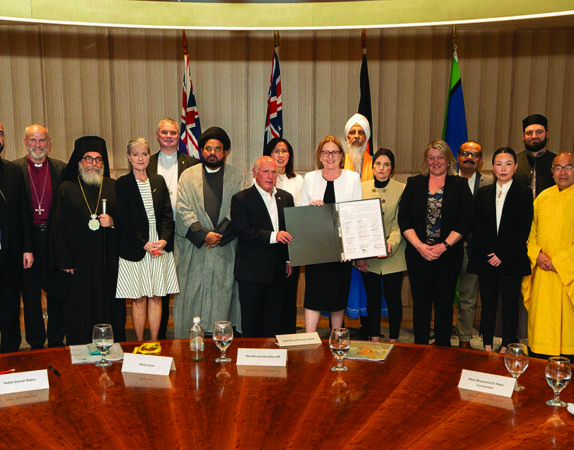
Unity, Harmony, and Standing Together as One Nation: An Islamic Theological Perspective in the aftermath of Bondi Beach attacks
12-26-2025
 Email
to a friend Email
to a friend
 Post
a comment Post
a comment
 Print Print
Islam is a religion founded upon mercy, justice, peace, and responsibility toward all people and humanity. The Qur’an affirms this universal mission with clarity: “And We have not sent you O Muhammad PBUH except as a mercy to all of creation” (Qur’an 21:107). These principles form the theological foundation through which Muslims understand and respond to moments of crisis, grief, and injustice.
The recent acts of terror and violence in Bondi are unequivocally condemned. Such criminal and evil acts have no place in Australian society or anywhere in the world. They must be collectively rejected, with firm moral clarity, while standing united in supporting all victims and those affected. The pain, fear, and shock felt across Australia and beyond reveal how deeply moments of crisis test character, faith, and moral responsibility. Islam calls believers to respond to these moments not with anger or division, but with compassion, justice, wisdom, and principled resolve. Allah, Exalted is He, commands: “O you who believe, stand firmly for justice as witnesses for Allah” (Qur’an 4:135).
Heartfelt condolences are extended to the Australian Jewish community, to the victims, their families, and all those affected. The grief, distress, and deep sense of insecurity experienced by the Jewish community are fully acknowledged, and solidarity and compassion are unequivocally affirmed. Muslims deeply empathise, understanding the trauma of having sacred spaces and sacred times violated, as tragically experienced by Muslims during the Christchurch massacre. While these attacks targeted the Jewish community, they are in reality an attack on all communities, including the Muslim community, and an assault on the safety, dignity, and harmony of the entire nation. Offering condolences, empathy, and support to those who are hurting is a core Islamic value and a shared national responsibility, exemplified throughout the Prophetic tradition by mercy, forgiveness, and dignified conduct even toward those who caused harm.
During such challenging times, the Muslim community—particularly the vulnerable, including women and the elderly—is urged to remain vigilant and calm, acting with wisdom during periods of heightened tension. Islam strongly cautions against the spread of misinformation and unverified or harmful content, especially through social media. Wisdom, restraint, and responsibility in speech and conduct are essential Islamic virtues. The Prophet Muhammad PBUH said: “Whoever believes in Allah and the Last Day should speak good or remain silent” (Bukhari and Muslim).
Reporting Islamophobic incidents remains essential. These include vandalism such as graffiti and arson, physical and verbal assaults, online threats, hate speech, and anti-Palestinian racism. Islamophobia and anti-Muslim hate should be reported regardless of scale so incidents are addressed appropriately, including through initiatives such as ANIC’s Action Against Islamophobia.
Islam calls believers to be builders of unity and peace, not agents of division or harm. Unity, justice, and compassion are among the clearest expressions of true faith and authentic Muslim character. These values are not confined to the mosque or the Muslim community but are to be lived openly throughout society. This is a time for unity, not division; for compassion, not hatred; and for standing together as one nation. The Prophet PBUH said: “Show mercy to those on earth, and the One in the heavens will show mercy to you” (Tirmidhi).
Reaching out to neighbours, friends, and colleagues from the Jewish community to offer comfort and reassurance reflects the true teachings of Islam, shared humanity, and moral responsibility. The Prophet PBUH taught: “Whoever believes in Allah and the Last Day, let him honour his neighbour” (Bukhari and Muslim). Standing with those who are hurting embodies Prophetic values of mercy and care for others, regardless of faith, race, or background. As the Prophet PBUH said: “The most beloved people to Allah are those who are most beneficial to people” (Tabarani).
Human life holds absolute sanctity in Islam, without distinction of faith, race, or background. The killing of innocent people is among the gravest crimes. Allah states: “Whoever kills a soul unless for a soul or for corruption upon the earth, it is as if he has killed all of mankind; and whoever saves one, it is as if he has saved all of mankind” (Qur’an 5:32). Islam unequivocally condemns violence, terrorism, and the spreading of fear in all its forms: “And do not cause corruption on the earth” (Qur’an 7:56).
Muslims have long been an integral part of Australia’s social fabric, contributing to its wellbeing while sharing responsibility for its peace, safety, and harmony. Islam places a duty on believers to be sources of reassurance and goodness in times of challenge. Allah commands: “Allah commands justice, excellence, and giving to relatives, and forbids immorality, wrongdoing, and oppression” (Qur’an 16:90). An attack on one community is an attack on all, weakening the moral and social fabric of the nation.
The Prophetic character is defined by patience, wisdom, calmness, and compassion, especially in times of distress. Acts of kindness, empathy, and reassurance are powerful forms of worship and social responsibility in Islam. As the Prophet Muhammad PBUH said: “I was sent only to perfect good character” (Ahmad).
|