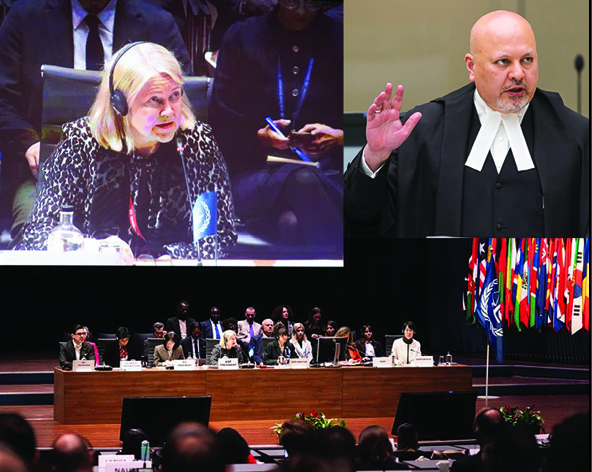
ICC Removes Prosecutor Karim Khan in Historic Vote —Netanyahu Warrants, Investigations Remain Intact
7-26-2026
 Email
to a friend Email
to a friend
 Post
a comment Post
a comment
 Print Print
For the first time in its history, the International Criminal Court has removed a sitting chief prosecutor from office. On Friday, 24 July 2026, member states voted to oust Karim Khan following findings of serious misconduct, closing a two-year disciplinary saga but leaving the court's most consequential work — including the Gaza-related arrest warrants — untouched.
The Decision
Meeting at UN Headquarters in New York, the Assembly of States Parties (ASP) voted by secret ballot: 82 of the ICC's 125 member states supported removal, comfortably clearing the 63-vote threshold, while 13 opposed and 15 abstained. ASP President Päivi Kaukoranta announced that the Assembly found Khan had "committed serious misconduct and a serious breach of duty." Khan denies the allegations and, through his lawyer Tayab Ali, has vowed to challenge the ruling through every available legal avenue. Deputy Prosecutors Nazhat Shameem Khan and Mame Mandiaye Niang now lead the Office of the Prosecutor; a permanent successor is not expected before 2027.
How the Case Unfolded
The proceedings trace back to 2024, when a junior staff member reported sexual misconduct allegations against Khan. After an initial review stalled, the matter was formally referred to the UN Office of Internal Oversight Services (OIOS) later that year. Khan voluntarily stepped aside in May 2025 as the investigation continued. In March 2026, a panel of independent judicial experts reviewed the record; Khan's team says that panel unanimously found the evidence did not establish misconduct. That opinion was advisory, not binding. On 8 June 2026, the ASP Bureau concluded grounds existed for removal, suspended Khan, and referred the matter to the full Assembly — culminating in Friday's vote.
What Doesn't Change
Crucially, Khan's removal does not affect the ICC's active investigations or its outstanding arrest warrants, including those issued in November 2024 against Israeli Prime Minister Benjamin Netanyahu and former Defence Minister Yoav Gallant. Under the Rome Statute, only ICC judges — not the prosecutor or the Assembly — have authority to withdraw or terminate a warrant. Israeli officials have renewed calls for the warrants to be dropped, but no legal mechanism triggered by this vote allows that.
The removal unfolded against a backdrop of intense U.S. and Israeli pressure on the court, raising a harder question about the institution's future — one our editorial board takes up next: Can International Justice Remain Independent Under Political Pressure?
Timeline
Date Event
2021 Karim Khan elected ICC Prosecutor for a nine-year term.
May 2024 Workplace misconduct allegations are reported internally; Khan separately announces applications for arrest warrants relating to the Gaza conflict.
October 2024 Allegations are referred to the U.N. Office of Internal Oversight Services for formal investigation.
November 2024 ICC judges issue arrest warrants for Benjamin Netanyahu and Yoav Gallant. The United States later imposes sanctions on Khan and other ICC officials.
May 2025 Khan voluntarily takes leave while the investigation continues.
March 2026 Independent judicial experts advise that the evidence reviewed is not conclusive under the applicable disciplinary standard.
8 June 2026 The ASP Bureau suspends Khan and refers the matter to the full Assembly.
13 July 2026 U.S. Secretary of State Marco Rubio announces an expanded campaign opposing the ICC.
24 July 2026 The Assembly of States Parties votes to remove Karim Khan from office.
|